Torrevieja's 37.6 km rainwater network and 64,738 m³ storage highlighted in AGAMED report
Why it matters: Torrevieja's rainwater system, according to the 2025 report, includes a 37.6 km network and 64,738 m³ of storage to help manage heavy rainfall and reduce flood risk.
Details:
- The AGAMED board, chaired by Mayor Eduardo Dolón, approved the 2025 Sustainable Development Report.
- The report highlights 37.6 km of rainwater conduits and 64,738 m³ of storage across nine strategic zones, including two large floodable parks.
- €3.9 million was invested in the port area for drainage upgrades and pollution control.
- A new multifunctional floodable park in Aguas Nuevas, with a planned investment of over €1 million, will open soon and includes sports and leisure areas.
- In 2025, €3,525,568 was recorded in renovation and investment in the networks.
- AGAMED reused 8,105,796 m³ of treated water for agriculture, representing 100% reuse in 2025.
What it means for you: Rainwater from intense storms will be temporarily stored and released in a controlled way to reduce flooding in urban areas. The park, due to open soon, combines flood drainage with sport and leisure spaces. AGAMED reused 100% of its treated water for agricultural irrigation in 2025.
The Board of Directors of AGAMED, chaired by the mayor of Torrevieja, Eduardo Dolón, today presented and approved the 2025 Sustainable Development Report, which places investment in water infrastructure and flood prevention among the company's main management priorities. The document highlights a network of 37.6 kilometres of rainwater conduits and a storage capacity of 64,738 cubic metres, distributed across nine strategic areas of the city, including two large floodable parks. These infrastructures allow rainwater to be retained and evacuated in a controlled way, helping to reduce the risk of flooding and its effects on the urban environment. The report also emphasises the €3.9 million investment in rainwater infrastructure in the port area, as well as renovation and improvement works on supply and sanitation networks. Eduardo Dolón highlighted the importance of continuing to invest in infrastructure prepared to face environmental challenges and intelligent rainwater management systems, linking these actions to the protection of the environment and the well-being of citizens.
Nine storage zones to manage heavy rain
One of the most relevant data points in the report is the 64,738 cubic metre rainwater storage capacity, equivalent to more than 64.7 million litres. This capacity is distributed among nine strategic locations and includes two large floodable parks. These spaces are part of a management model that combines hydraulic infrastructure with nature-based solutions. Their function is to temporarily store water during rain events and facilitate its controlled evacuation, reducing pressure on the drainage system and impacts on the most sensitive areas. The rainwater network reaches 37,600 metres in length, of which 35.7 km are gravity conduits and 1.9 km are pressurised. The report also highlights the addition of dynamic hydrodiffusers to minimise pollution carried by runoff water and improve the environmental quality of the urban environment.
Nearly €4 million invested in the port area
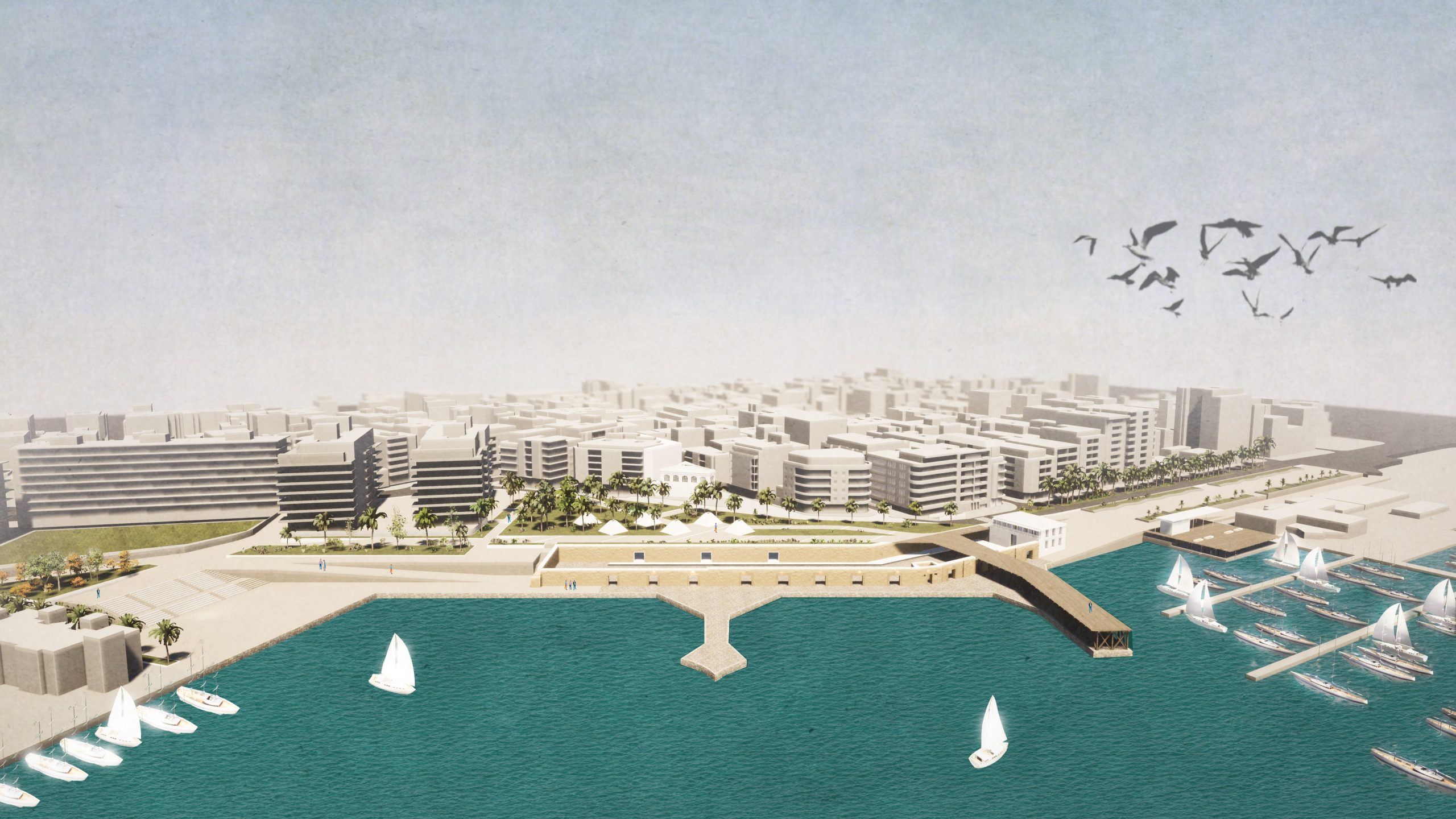
Among the highlighted actions, the document records a €3.9 million investment in the port area, with the addition of hydrodynamic separators to the rainwater management system. This intervention combines improved drainage infrastructure with treatment of pollution carried by runoff. In this way, rain management incorporates both evacuation capacity and environmental protection for receiving areas. These actions are part of Torrevieja's adaptation to more frequent and severe torrential rainfall, through infrastructure capable of responding to these situations and reducing their impact on the city.
Over €1 million for a multifunctional space with sustainable drainage
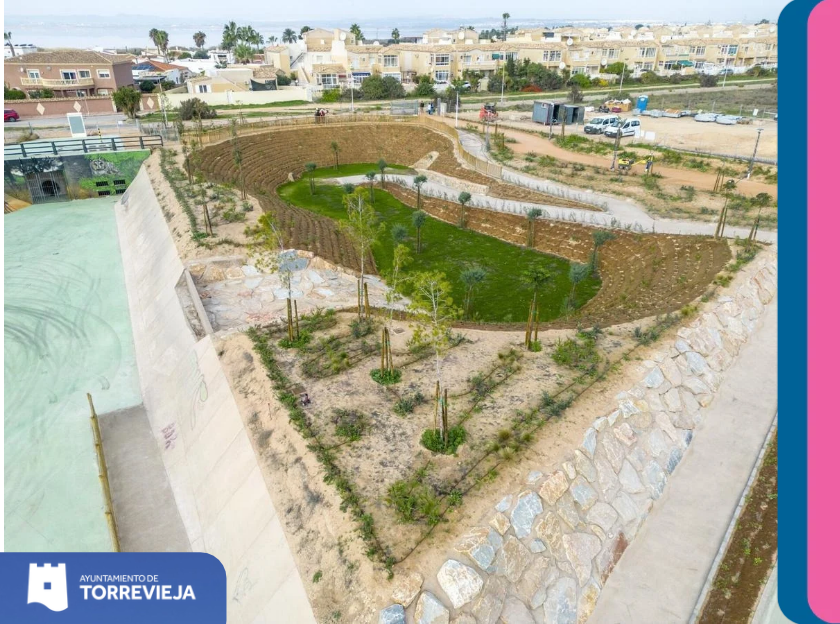
The report also includes, within the new green infrastructure plan, the new multifunctional floodable park in Aguas Nuevas, which will open soon, with a planned investment of over €1 million and an area of more than 4,100 square metres. The design combines sustainable rainwater management with new public spaces for sport, leisure and recreation. It includes a sports area with a skatepark and skating bowl, whose elements are integrated into the sustainable urban drainage system. The project also includes more than 1,500 square metres of rain gardens and sustainable drainage solutions, with native vegetation and measures to promote biodiversity. The action proposes a 20% increase in naturalised areas, also incorporating a climate refuge function.
Over €3.5 million in network renovation and investment
Alongside rainwater infrastructure, the report details the financial effort dedicated to modernising the entire water system. In 2025, €2,397,308 was spent on renovation and €1,128,260 on investment, totalling €3,525,568. Supply works make it possible to improve distribution conditions and reduce losses from breakages. In sanitation, improvements aim to increase the capacity for evacuating wastewater and drainage, prevent infiltration and correct odour problems. The drinking water network reaches 709.39 km, with nine reservoirs totalling 38,200 cubic metres and four pumping stations. During the year, 10.637 million cubic metres of water were supplied and 129,575 customers were served.
Cleaning of 322 kilometres of sewers and 5,513 drains
Preventive maintenance is another pillar of infrastructure operation. AGAMED has 343.4 km of sewer network, including gravity and pressurised conduits, and 36 pumping stations. In 2025, 322 km of sewers and 5,513 drains were cleaned, and 174,051 metres of network were inspected by camera and pole. Preventive tasks included 2,203 hours of scheduled cleaning and attention to problem spots, as well as 1,209 hours checking the condition of installations and detecting deficiencies. 1,164 metres of network were also renewed and 185 covers replaced with hermetically sealed ones. The report stresses the importance of citizen cooperation in maintaining these facilities. In the last year, 221 tonnes of non-biodegradable waste, such as wipes, masks and gloves, were removed, and around 220 incidents in pumping stations and networks were dealt with.
100% reuse of treated water and waste recovery
Investment and maintenance of infrastructure is complemented by a model for resource use. In 2025, AGAMED reused 8,105,796 cubic metres of treated water for agricultural irrigation, representing 100% of treated water. 11,555 tonnes of sludge from treatment were also recovered: 8,948 tonnes for agricultural use, 2,506 for use as fuel and 101 for composting. 9,515 tonnes of construction and demolition waste were also recovered. In energy, the company covers 100% of its electricity purchases with renewable energy and has a photovoltaic installation in Torreblanca generating over 60,000 kWh annually. Its fleet has 27 electric and hybrid vehicles, 61.36% of the total.
Social protection and citizen service
The report also maintains a strong social focus. In 2025, the Social Fund allocated €374,868 to help 1,044 families pay their water bills, in coordination with municipal Social Services. These aids are in addition to €739,288 financed without late interest, through 1,070 payment agreements. The total contribution to social funds over the past six years is €1,901,498. The company also allocated over €232,000 to 383 social initiatives, along with employability programmes, university scholarships, environmental education and cooperation with local entities. Its activity involved 148 local suppliers, with purchases totalling €6 million. In service quality, 1,029 water analyses were carried out, 3,392 customers used remote meter reading and 132,538 online transactions were processed. Overall service rating was 7.70 out of ten. The balance approved by the Board of Directors thus reflects the role of water infrastructure in the protection and functioning of Torrevieja, with special attention to rainwater management, network modernisation and water use, along with support measures for families.
Source: Ayuntamiento de Torrevieja ↗ · Discuss on Telegram ↗